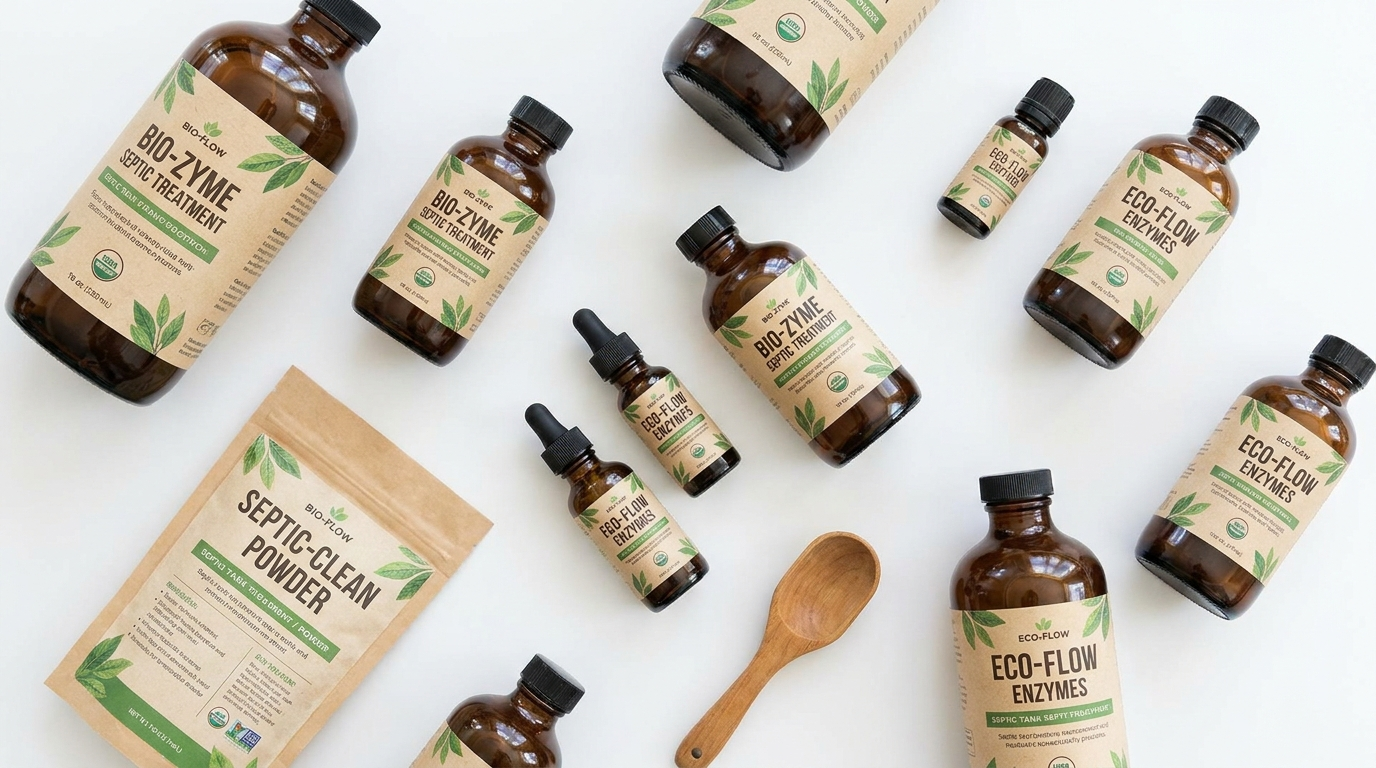
If you own a septic system, you've probably seen products claiming to reduce sludge, eliminate odors, improve bacterial activity, and even prevent costly repairs.
But do septic tank additives actually work — or are they just another product you don't really need?
The honest answer: somewhere in the middle.
Quality biological additives can help support the natural bacterial processes inside your tank. But no additive can replace regular pumping, repair damaged components, or reverse a failing drain field. For homeowners in Bryan, College Station, and throughout the Brazos Valley, understanding what these products can and can't do will help you make smarter maintenance decisions.
What Are Septic Tank Additives?
Septic additives are products you add to your system through a toilet or drain. Most fall into one of two categories:
Biological Additives
These contain bacteria, enzymes, and natural microorganisms designed to help break down organic waste inside the tank. These are the ones worth considering.
Chemical Additives
These use synthetic chemicals to dissolve grease or break apart solids. Most septic professionals recommend avoiding harsh chemical additives — they can disrupt the natural bacterial balance your system depends on and may even damage components over time.
How a Healthy Septic System Already Works
Here's the thing: a properly functioning septic tank already contains billions of naturally occurring bacteria. These microorganisms break down human waste, food particles, and organic materials around the clock — no additive required.
As waste decomposes, solids settle to the bottom, oils float to the top, and partially treated water flows into the drain field. Because this happens naturally, many septic professionals argue that healthy systems don't need additives at all.
So why do people use them?
When Additives Can Actually Help
Biological additives are most useful when something has disrupted your system's natural bacterial balance:
- Heavy use of antibacterial soaps or bleach — kills off beneficial bacteria
- Extended vacancy — a vacation home sitting empty for months loses bacterial activity
- High water usage events — large gatherings that flood the system
- After a pump-out — some homeowners add a treatment to help re-establish bacteria
In these situations, a quality biological treatment can help restore bacterial levels faster than waiting for natural repopulation.
What Septic Additives Cannot Do
This is where marketing claims get misleading. No septic additive can:
- Eliminate the need for pumping — solids still accumulate regardless
- Fix a broken tank or damaged pipes
- Restore a failed drain field
- Remove tree roots from your lines (see: How to Stop Tree Roots from Wrecking Your Septic System)
- Solve a backup problem — that needs professional attention
If a product promises to eliminate pumping forever, walk away.
The Best Septic Additives for Homeowners
🥇 Green Gobbler Septic Saver — Best Overall
One of the most popular septic maintenance products available. Easy-to-use monthly packets with a strong enzyme and bacteria formula.
- ✅ Easy monthly packets
- ✅ Strong enzyme and bacteria formula
- ✅ Excellent customer reviews
- ❌ Ongoing monthly cost
Recommended Product
Green Gobbler Septic Saver Bacteria Enzyme Pacs
Monthly enzyme pacs that support bacterial breakdown of waste. Helps reduce sludge buildup and odors between pump-outs.
RID-X Septic System Treatment — Best Value
A trusted name in septic care for decades. Widely available, affordable, and effective for routine maintenance.
- ✅ Affordable and widely available
- ✅ Established reputation
- ✅ Bacteria and enzyme formula
- ❌ Results vary by system condition
Recommended Product
RID-X Septic Tank Treatment (1-Year Supply)
The #1 selling septic treatment. Natural bacteria and enzymes that help break down waste and prevent buildup between pumpings.
Bio-Clean — Best Professional-Grade Option
Often recommended by plumbers and septic contractors for its strong bacterial formula. Higher cost, but favored for systems that need extra support.
- ✅ Strong bacterial formula
- ✅ Trusted by professionals
- ✅ Good for heavy-use systems
- ❌ Higher price point
When Using an Additive Makes Sense
Consider a monthly biological treatment if:
- Your system gets heavy daily use
- You frequently use cleaning chemicals or bleach
- You own a vacation or rental property
- You want extra maintenance support between pump-outs
Most homeowners who use them view them as inexpensive insurance — not a cure, but a sensible habit.
The Most Important Maintenance Step: Don't Skip Pumping
No additive is more important than routine pumping. Most residential systems need pumping every 3 to 5 years depending on tank size, household size, and water usage habits. Regular pumping removes accumulated sludge that bacteria simply cannot fully eliminate on their own.
Skipping pumping is one of the leading causes of septic system failure — and failure is expensive. For full details on costs and schedules, see:
- How Much Does Septic Pumping Cost in Bryan-College Station TX?
- How Often Should You Pump Your Septic Tank in Texas?
Bottom Line
Stick with reputable biological treatments like Green Gobbler or RID-X if you want to add a maintenance layer between pumpings. They may help support healthy bacterial activity and reduce odor and buildup.
Just remember: additives complement good septic habits — they don't replace them.
Need Septic Service in Bryan-College Station?
If you're experiencing slow drains, sewage odors, backups, or standing water, it's time for a professional inspection — no additive will fix that.
Browse our directory of trusted septic companies serving Bryan, College Station, Navasota, Hearne, Caldwell, Brazos County, and the surrounding Brazos Valley area to get free quotes today.
Not sure who to call? Check out our Top 10 Septic Companies in the Brazos Valley for our highest-rated picks.